
Stroke Preclinical Intervention Trials
Coordinating Center
The SPRINT Coordinating Center (CC) consists of a Core team and multiple research groups all hosted at Charité Berlin and the Berlin Institute of Health (BIH) at Charité Berlin. The CC fulfills the following tasks:
-
Manage network communications (off-line, virtual and in person meetings), and prepare the minutes for approval.
-
Draft and distribute the SOPs for decision making by the SC.
-
Facilitate animal protocol approvals by drafting a master protocol to be adopted and modified as needed by all sites.
-
Manage harmonization process.
-
Serve as the Trial Management Committee (TMC), responsible for execution of the study day-to-day (from centralized randomization to data analyses and reporting).
-
Manage the database, on-site data verification, data storage and data analysis.
-
Manage the network funds flow, initiates outside funding applications.
-
Manage network publications (chairs publication committee, PC) and public-facing contents (website, Wiki, public announcements).
-
Serve as the Data monitoring committee (DMC): Monitor study delivery and data veracity and help make decisions about continuing or stopping an intervention in multistage studies. Ensures that a sufficient but not excessive number of animals are studied.
Core Team, Charité

Prof. Cenk Ayata, MD, PhD
Principal Investigator
Professor of Neurology
Massachusetts General Hospital /
Harvard Medical School
Visiting Professor Charité

Prof. Matthias Endres, MD
Principal Investigator
Professor of Neurology
Charité Universitätsmedizin - Berlin

Isra Tamim, MD/PhD
Clinician-Scientist, Lead Coordinator
Charité Universitätsmedizin - Berlin
Massachusetts General Hospital /
Harvard Medical School

Paul Fischer, MD/PhD
Clinician-Scientist, Lead Coordinator
Charité Universitätsmedizin - Berlin
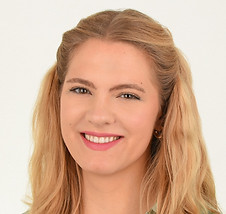
Laura Kate Ismajli, MS
Student assistant
Charité Universitätsmedizin - Berlin
Responsible PrecliniX, BIH at Charité
Responsible PrecliniX aims to evaluate and improve preclinical research and to support researchers in generating patient-relevant and robust findings, ensuring high research standards and clinical relevance, and thus enabling iterative translation from bench to bedside and back. It offers needs assessment such as Metric-based evaluation, SWOT analysis (Strengths, Weaknesses, Opportunities, Threats) or Identification of areas for action. Services aim to cover the entire translational road from bench to bedside and include support in preregistration, experimental design or process optimization amongst others.

Natascha Drude, PhD
Unit Lead Responsible PrecliniX
Berlin Institute of Health (BIH) at Charité
BIH QUEST – Quality | Ethics | Open Science | Translation
Center for Responsible Research
DECIDE, BIH at Charité
Ulf Tölch, PhD, PD
Research Group Leader Systemic Perspectives in Translational Biomedicine
Project leader Education, Training & Quality in Research
Berlin Institute of Health (BIH) at Charité
BIH QUEST Center for Responsible Research
Preclinical research aims to develop new therapies and ultimately bring them to patients by translating basic scientific findings into applied research. Before moving to clinical trials, the effectiveness of these new treatments must be rigorously tested in experimental settings. However, frequent errors in this translational process often prevent clinical trials from building on promising preclinical results, resulting in a translational gap with broad medical, economic, social, and ethical consequences.
To address this (confirmatory) preclinical studies are supported by the DECIDE project, which offers consultation and seeks to identify success factors and develop guidelines for such studies. Amongst others, DECIDE has produced a guidance document to assist researchers in planning and conducting confirmatory preclinical studies and systematic reviews. For the SPRINT network DECIDE will provide essential support in statistics, logistics, SOPs and trial planning.

Systematic review and meta-analysis, BIH at Charité
Systematic review and meta-analysis are research synthesis methods that clearly identify what we currently know, how reliable the evidence is, and where future research is needed. Using these tools, the “Preclinical systematic reviews and meta analyses” group aims to improve the validity, increase the value, and facilitate the translation of preclinical research. The group performs research to support decisions on how experiments are designed and justified and when evidence is translated to the clinic. This can help to reduce waste and deliver more ethical animal research, in line with the 3Rs (Replacement, Reduction, Refinement).
The group also provides a supporting framework for other research groups to perform systematic reviews by developing guidance and delivering education and methodological assistance. By developing and testing software and automation tools, the group supports more efficient and timely syntheses for all stakeholders. The group strives to facilitate the growth of interdisciplinary evidence synthesis communities and promote data sharing and open, team science.

Sarah McCann, PhD
Research Group Leader CAMARADES Berlin
Berlin Institute of Health at Charité (BIH)
BIH QUEST Center for Responsible Research
EPIC3R - Neuroimaging, Charité
Research Group Boehm-Sturm mainly focuses on quantitative MRI. Using biophysical models, quantitative MRI establishes a link between measured MRI parameters (e.g. change of water diffusion after a stroke) and important biological parameters (e.g. cellular swelling) to increase the validity of the MRI for stroke diagnosis, but also for therapy evaluation. Imaging allows noninvasive acquisition of data on the living animal and therefore contributes to implementing the 3R (Replace, Reduce, Refine) in animal experiments. Philipp Boehm-Sturm is head of the technology platform "ExPerimental Imaging" at Charité (EPIC3R) within Charité 3R, which aims to improve the preclinical imaging infrastructure at Charité.
Prof. Philipp Boehm-Sturm, PhD
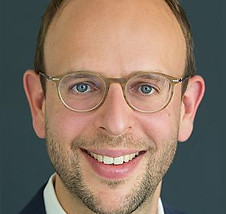
EPIC3R Group Leader
Charité 3R | Replace, Reduce, Refine
Department of Experimental Neurology
Center for Stroke Research Berlin (CSB)
Statistics Core, Charité

Prof. Frank Konietschke, PhD
Lead Causal Interference
Charité Universitätsmedizin - Berlin
Institute for Biometry and Clinical Epidemiology
My field of research is in the area of Mathematical Statistics, and I am particularly interested in developing new statistical inference methods for the analysis of biomedical data with applications to:
Ranking Procedures for Factorial Designs
Factorial Diagnostic Trials
Multiple Comparison Procedures
High dimensional data analysis
Longitudinal data.
A strong emphasis is placed on small sample size approximations and resampling methods.